



Art & Moral Insight specifications:

Security policy

Delivery policy

Return policy
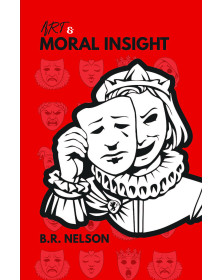
B. R. Nelson’s earlier books are mainly concerned with precise ways in which different art forms can be forms of knowledge.
As a development of this interest, Art and Moral Insight shows in detail how drama and music can represent moral phenomena with a subtlety and depth that is not accessible to the logic of propositions and discursive language in general.
In the first part, the moral theories of Aristotle and Hume are set against the idea that morality emerges not from a faculty such as reason or feeling but rather from the form that is taken by reflective life, the form of a life that is valued in itself. This is related to an instability in moral phenomena and the necessity for non-mechanical causation in moral judgement.
In Part 2 and Part 3, Nelson demonstrates how form in works of art by Shakespeare, Bach and Orlando di Lassus is specifically shaped in order to reveal the inner life of the individual and its connection to the world to which it belongs. This enables the work to portray reflective life in action and to explore the moral instability that pervades it.
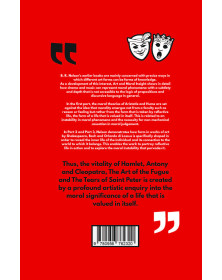
Thus, the vitality of Hamlet, Antony and Cleopatra, The Art of the Fugue and The Tears of Saint Peter is created by a profound artistic enquiry into the moral significance of a life that is valued in itself.
Art & Moral Insight specifications: